Lingual Frenulum: Anatomy and Function
⚡ Key Clinical Takeaways
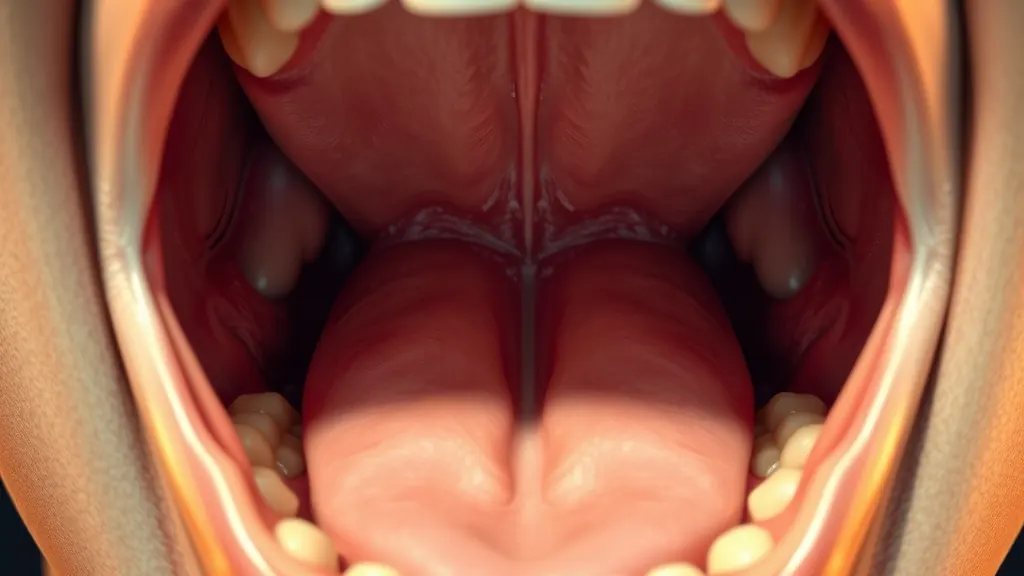
- The lingual frenulum is a small fold of mucous membrane that connects the underside of your tongue to the floor of your mouth.
- The lingual frenulum is a thin, vertical band of soft tissue that anchors the underside of the tongue to the floor of the mouth.
- A normally developed lingual frenulum provides a balance between stability and mobility.
- Assessment moves beyond a simple visual check to evaluate how the structure impacts real-world function.
- Clinical research supports a functional, symptom-based approach to evaluating the lingual frenulum.
Quick answer
The lingual frenulum is a small fold of mucous membrane that connects the underside of your tongue to the floor of your mouth. Its primary function is to stabilize the tongue's position and limit its range of motion to a normal, healthy degree. An unusually short, thick, or tight lingual frenulum is diagnosed as ankyloglossia, or tongue-tie.
At a glance
- The lingual frenulum is typically 12-25mm in length in adults.
- Ankyloglossia (tongue-tie) is estimated to affect 4-10% of newborns.
- The frenulum's elasticity is a key functional marker, distinct from its attachment point.
- A normal frenulum allows the tongue tip to lift to the roof of the mouth and extend past the lower gum line.
- The structure contains no major muscles but is rich in connective tissue and sensory nerves.
What is the lingual frenulum?
The lingual frenulum is a thin, vertical band of soft tissue that anchors the underside of the tongue to the floor of the mouth. This structure is present in everyone and is a normal part of oral anatomy. Its composition is primarily collagen and elastin fibers, covered by a mucous membrane, and it contains sensory nerves and blood vessels. Its primary role is not to restrict the tongue, but to provide a stable point of origin, allowing the tongue's complex muscles to function efficiently for essential tasks like swallowing, speaking, and chewing.
Normal function vs. restricted function
A normally developed lingual frenulum provides a balance between stability and mobility. It acts as a tether, but one with enough length and elasticity to permit full range of motion. The key functions it supports include:
- Infant Feeding: Allows the tongue to create a seal, cup the nipple, and generate the peristaltic wave necessary for efficient milk transfer.
- Swallowing: Enables the tongue to properly position food and liquid against the palate to initiate the swallow reflex.
- Speech: Facilitates the precise tongue movements needed to form consonants like "t," "d," "l," and "r."
- Oral Rest Posture: Helps maintain the tongue's correct resting position against the palate, which supports nasal breathing and proper dental arch development.
- Oral Hygiene: Allows the tongue to sweep across tooth surfaces to clear food debris.
When the frenulum is restrictive (ankyloglossia), these functions can be compromised. The difference lies in the functional range of motion, not just the appearance.
| Functional Marker | Normal Frenulum | Restrictive Frenulum (Tongue-Tie) |
|---|---|---|
| Tongue Extension | Tip can extend well past the lower lip. | Tip may not reach past the lower gum line. |
| Tongue Elevation | Tip can easily touch the roof of the mouth. | Tip cannot reach the palate; may cause heart-shaped dimpling. |
| Lateral Movement | Can touch both corners of the mouth without jaw movement. | Limited side-to-side movement; jaw may shift to compensate. |
| Suck/Swallow Pattern | Smooth, coordinated peristaltic wave. | May use compensatory jaw movements, leading to clicking sounds, fatigue, and poor latch. |
How is lingual frenulum function assessed?
Assessment moves beyond a simple visual check to evaluate how the structure impacts real-world function. Here are the key steps in a professional assessment:
- Visual Inspection: The provider looks at the frenulum's attachment point (tip of tongue or further back), thickness, and color.
- Range of Motion Tests: These include measuring how far the tongue can extend, lift, and move side-to-side. The "tongue-tip to palate" test is a common measure.
- Functional Evaluation: For infants, this involves observing a feeding session for latch, suck, and swallow efficiency. For older patients, it may involve assessing speech articulation or swallowing patterns.
- Symptom Correlation: The provider reviews reported symptoms—such as nipple pain, poor infant weight gain, speech difficulties, or dental issues—to see if they align with the observed physical restrictions.
Tools like the Hazelbaker Assessment Tool for Lingual Frenulum Function (ATLFF) or the Coryllos classification are often used to standardize this assessment. A diagnosis is typically made by a pediatrician, ENT, dentist, or oral surgeon, often in collaboration with a lactation consultant for infants.
What does the evidence say about frenulum function and release?
Clinical research supports a functional, symptom-based approach to evaluating the lingual frenulum. Key evidence-based points include:
- Correlation Over Causation: The mere presence of a short-looking frenulum does not automatically mean dysfunction. The decision to intervene should be based on the presence of significant functional impairments (e.g., feeding difficulties, speech disorders) linked to the restriction.
- Feeding Outcomes: Multiple studies and systematic reviews, including those referenced by the Academy of Breastfeeding Medicine, indicate that frenotomy can improve breastfeeding outcomes like maternal nipple pain and infant milk transfer when a clear functional impairment exists.
- Speech & Dental Outcomes: Evidence for release improving speech or preventing dental issues like gaps or recession is less definitive and more individualized. It is generally supported when a qualified speech-language pathologist or dentist identifies a clear mechanical limitation from the frenulum.
- The "Wait-and-See" Approach: Research notes that some tongue-ties may stretch or become less problematic over time, but others may lead to persistent compensatory patterns. Assessment is an ongoing process.
Common symptoms of a restrictive lingual frenulum
Symptoms vary by age. In infants, signs often relate to feeding: difficulty latching, prolonged feeds, poor weight gain, clicking sounds while nursing, and maternal nipple pain or mastitis. Parents may also notice the baby is excessively gassy or colicky due to swallowing air. In older children and adults, symptoms can include speech articulation errors (especially "l," "r," "t," "d," "s," "z"), inability to lick an ice cream cone, challenges with oral hygiene, tongue thrust, and even neck pain or postural issues due to compensatory muscle patterns.
What are the treatment options?
When a restrictive frenulum is causing significant problems, the primary treatment is a surgical release, known as a frenotomy or frenectomy.
- Frenotomy: A simple snipping of the thin frenulum tissue, often performed in an office setting on infants with minimal bleeding.
- Frenectomy: A more complete removal of the frenulum tissue, often using a laser or scalpel. This is common for thicker frenula or in older patients.
The choice between laser vs. scissors for a baby's release depends on the provider's training and the frenulum's characteristics. Following any release, a crucial component of success is post-operative care, which almost always includes stretching exercises to prevent reattachment and encourage proper tongue mobility. You can learn about the frenectomy stretch protocol on our site.
Steps to take if you suspect a problem
If you are concerned about lingual frenulum function for yourself or your child, follow these steps:
- Document Symptoms: Keep a log of specific issues—feeding times, latch difficulties, speech sounds, or any pain or discomfort.
- Consult a Primary Care Provider: Start with your pediatrician, dentist, or general physician. They can perform an initial assessment.
- Seek a Specialized Evaluation: Depending on the symptoms, this may involve a lactation consultant (for infants), a speech-language pathologist (for speech), or an ENT/oral surgeon (for surgical assessment).
- Get a Comprehensive Assessment: Ask the provider to evaluate both the anatomy of the frenulum and its functional impact. Use tools like the tongue range of motion test.
- Discuss Options: If a restriction is confirmed, talk about all management paths, including therapeutic exercises, watchful waiting, or surgical release.
- Plan for Aftercare: If surgery is chosen, understand the full commitment required for post-frenectomy recovery and stretches to ensure optimal results.
Frequently Asked Questions
Can a lingual frenulum stretch on its own?
Yes, to a degree. In some infants, the frenulum may stretch with normal tongue use over time. However, a thick, fibrous frenulum is less likely to stretch significantly without intervention.
Is the lingual frenulum necessary?
Yes, everyone has one. A normal frenulum is necessary for tongue stability. The issue arises only when it is abnormally restrictive, limiting function.
How do I know if my baby's frenulum is normal?
A normal infant frenulum allows the tongue to extend over the lower gum, lift to the palate, and move side-to-side. Signs of restriction include a heart-shaped tongue tip when crying or an inability to maintain a deep latch during breastfeeding.
Can tongue-tie affect speech later in life?
It can. A restrictive frenulum may limit the tongue-tip elevation needed for clear articulation of certain sounds. However, not all speech issues are caused by tongue-tie, and not all tongue-ties cause speech problems. A speech-language pathologist can assess the connection.
Does a lip-tie affect function like a tongue-tie?
A labial frenulum (lip tie) is a different structure. While a very tight upper lip tie may affect breastfeeding latch or contribute to a gap between front teeth, its functional impact is generally considered less broad than that of a restrictive lingual frenulum.
Can adults get a tongue-tie release?
Yes. Many adults seek tongue-tie surgery for persistent issues like speech, neck pain, sleep apnea, or dental problems linked to a restrictive frenulum they've had since childhood. The assessment and recovery process is more involved than for infants.
References
- Academy of Breastfeeding Medicine. (2023). Clinical Protocol #11: Guidelines for the Evaluation and Management of Neonatal Ankyloglossia and Its Complications.
- American Academy of Pediatric Dentistry. (2021). Policy on Management of the Frenulum in Pediatric Dental Patients.
- National Health Service (NHS) UK. (2024). Tongue-tie (ankyloglossia) Information for Parents.
- Mayo Clinic. (2025). Tongue-Tie (Ankyloglossia): Symptoms and Causes.
- O'Shea, J. E., et al. (2017). Frenotomy for tongue-tie in newborn infants. Cochrane Database of Systematic Reviews.
Medical disclaimer
This article is for informational purposes only and is not medical advice. It does not replace consultation with a qualified healthcare provider. Always seek the advice of your physician, lactation consultant, dentist, or other qualified health professional with any questions you may have regarding a medical condition. Reviewed by the frenectomyguide.com editorial team · Last updated 2026-10-31.
Ready to find an accredited frenectomy provider near you?
Browse 15,302 verified frenectomy centers (0 verified), filter by tests and treatments, and reach out directly — all in one verified directory.
🔍 Search Accredited Centersor call a clinic directly from its profile — every listing has a verified phone number.
This medical guide complies with the American Academy of Oral Surgery (AAPD) standards of care for oral restrictions and reflects generally accepted clinical guidelines. It is informational and not a substitute for personalized medical advice.